

It's Not Magic. It's Metadata: Aligning Content Strategy to Business Outcomes
Content leaders keep asking how to publish faster, prove AI readiness, and justify continued investment. I make the case that metadata strategy, not content strategy alone, is what actually gets them there.
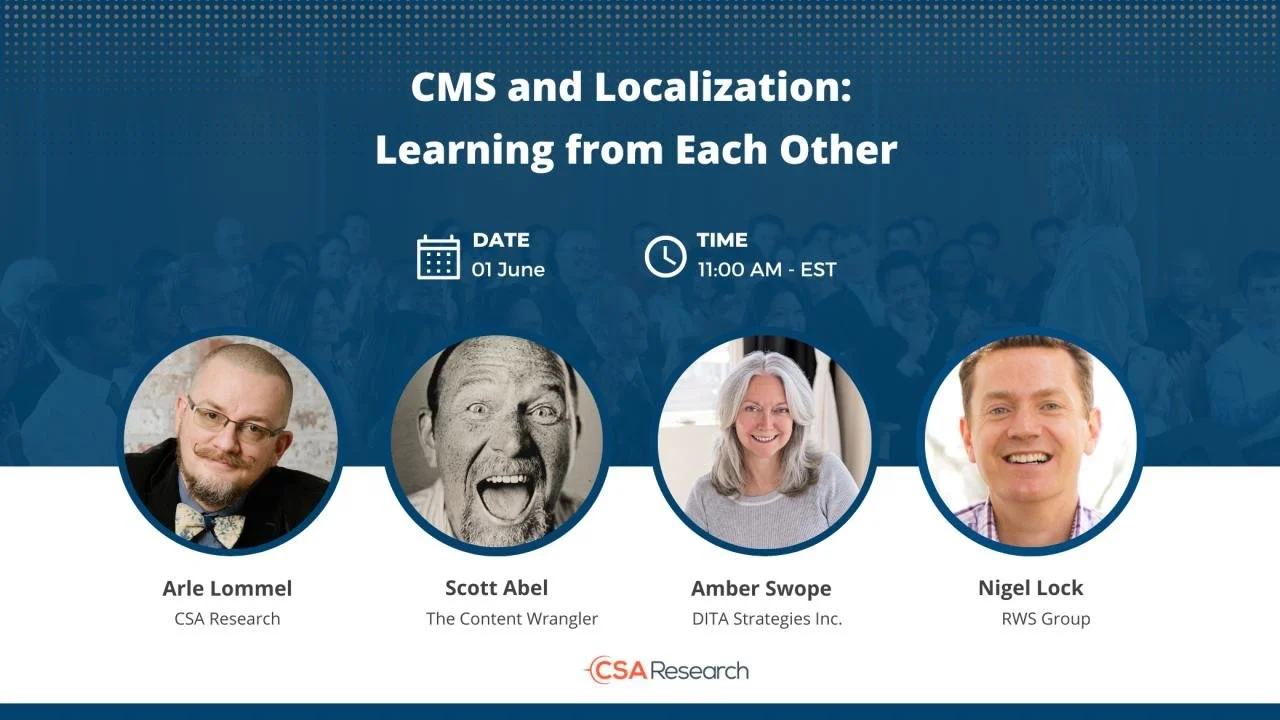
What Can Localization Learn from the CMS Industry?
Most organizations approaching AI for content or localization are focused on the wrong question. They're asking how to reduce effort — and missing the more important question of where value goes once effort is no longer the measure. This panel with CSA Research, The Content Wrangler, and RWS examines that shift and what it requires of content architects, localization professionals, and the decision-makers they report to.
Becoming the Agent of Change Your Content Team Needs
Most content teams have someone who ends up responsible for driving change — not because they volunteered, but because the work demanded it. In this conversation with Dawn Stevens on The Content Wrangler, I talk through what it actually takes to step into that role: how to know yourself well enough to contribute, how to ask the questions that surface real resistance, and why the age of effort is over.
How Information Architecture Powers Self-Service Documentation
Good self-service documentation doesn't happen by accident — it starts with information architecture. Amber Swope and Lief Erickson explain how IA structures content that users can actually find and use on their own.
Content Matters: Unlocking the Power of Information Architecture
How do you scale your content strategy while preparing for AI? Amber Swope covers IA maturity models, DITA roles, and generative AI's impact on content architecture in this hour-long podcast conversation.

Love Your Curmudgeon: Embracing Your Least Likely Partner In Transformation
The skeptic on your team who resists every change initiative might be your most valuable asset. Amber Swope explains how to understand, engage, and ultimately win over your curmudgeon.
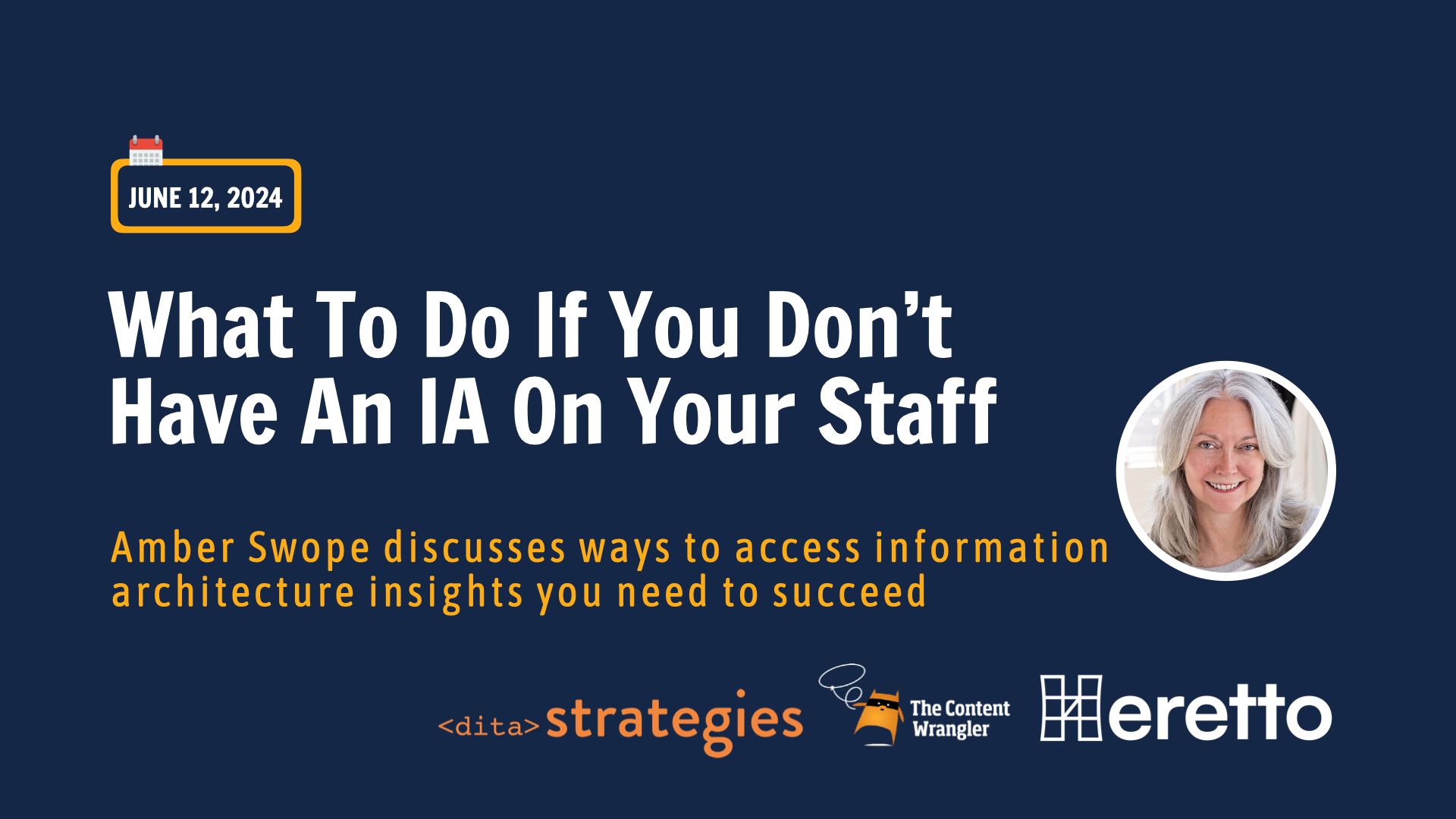
What To Do If You Don’t Have An IA On Your Staff
Most teams doing structured content work don't have a dedicated information architect. That doesn't mean the IA work doesn't need to happen — it means someone on your team is already doing parts of it without the title or the framework. In this session, I walk through the distinction between management IA and delivery IA, and what a small team can do to make real progress on both without hiring a full-time specialist.
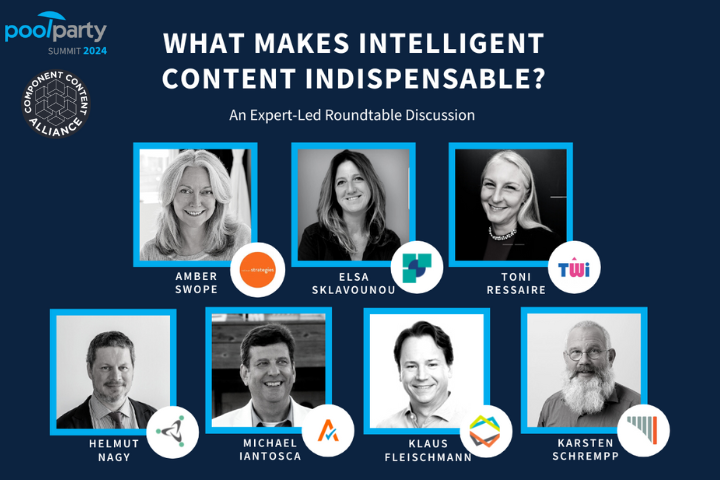
What Makes Intelligent Content Indispensable? An Expert-led Roundtable Discussion
Intelligent content is content that can have a life of its own — designed to be delivered across contexts and to perform as designed when it gets there. In this roundtable from PoolParty Summit 2024, I joined five colleagues from the Content Component Alliance to work through what that actually requires. The conversation covers framework, metadata, terminology, knowledge graphs, and why most organizations building AI tools right now are solving the wrong problem.

Breaking Barriers: Content Pros as GenAI Pioneers
Most generative AI projects don't fail because the technology doesn't work — they fail because the content fed into the system isn't structured, scoped, or quality-controlled. In this panel, Lief Erickson, Fabrice Lacroix, and I discuss the patterns we've seen across real projects, including why "almost right" answers are more dangerous than obvious hallucinations. If you're a content professional trying to figure out where you fit in your organization's AI initiative, this conversation is for you.
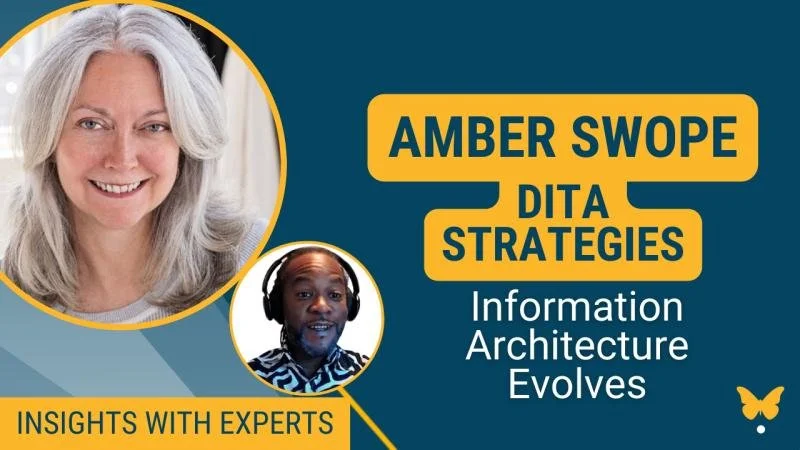
Insights with Experts: Information Architecture Evolves
Information architecture isn't a one-time project — it evolves as your content and business needs change. Amber Swope explores IA maturity models, metadata strategy, and how to know when it's time to level up.

Uncompromise your content: Maximize your CCMS investment with information architecture
Most organizations underuse their CCMS because their information architecture isn't ready for it. Amber Swope shows you exactly what to fix before your CCMS can deliver on its promise.

How to Build a Successful Business Operating Model with Content Governance
Content governance is one of the most misunderstood investments an organization can make. Amber Swope explains how to build a governance model that actually supports your business goals rather than slowing your team down.

Boston DITA User’s Group: Developing a DITA Content Model
A DITA content model is often the first thing cut when deadlines are tight — and it's always a mistake. Amber Swope walks through her methodology for building one efficiently, even under pressure.

Coffee and Content: Developing Information Architecture in an Agile Environment
Agile and information architecture don't always play nicely together — but they can. Amber Swope explains how IAs can use backlogs, content stories, and sprint planning to stay ahead of the development team.

IXIAtalks: Episode 17 - How to Power Up Your Content With Taxonomy
Without taxonomy, content is unfindable — no matter how good it is. Amber Swope explains how to recognize, build, and optimize taxonomy in your organization to power search, navigation, and personalized delivery.

Sharing content across the enterprise
Sharing content across departments sounds simple, but it requires careful architecture. Amber Swope walks through how to define, scope, and manage DITA content collections for cross-team reuse.

Using Structured XML to Power your Learning Content
Learning and training content has the same reuse problem as technical documentation — and the same solution. Amber Swope explains how DITA XML gives L&D teams one structured source that powers any delivery platform.

Automate to Stay Up-to-Date: 5 Ways to Maintain Your Training Content
Most learning and training teams can't keep their content up to date — not because they don't try, but because their content architecture makes maintenance harder than it needs to be. Amber Swope shares five ways automation and structured content can fix that.

Optimizing your DITA Content Model for Translation
Translation costs scale directly with the quality of your DITA content model. Amber Swope explains what to fix in your model before sending content for translation — and how structured content can dramatically reduce your localization burden.

DITA XML as a Neutral Content Source for Educational Publishers
Educational publishers can't afford to maintain separate content for every delivery format. Amber Swope explains how DITA XML creates a single neutral source that powers print, digital, and personalized learning — from one place.